

First Foods for Your Baby at 6 Months
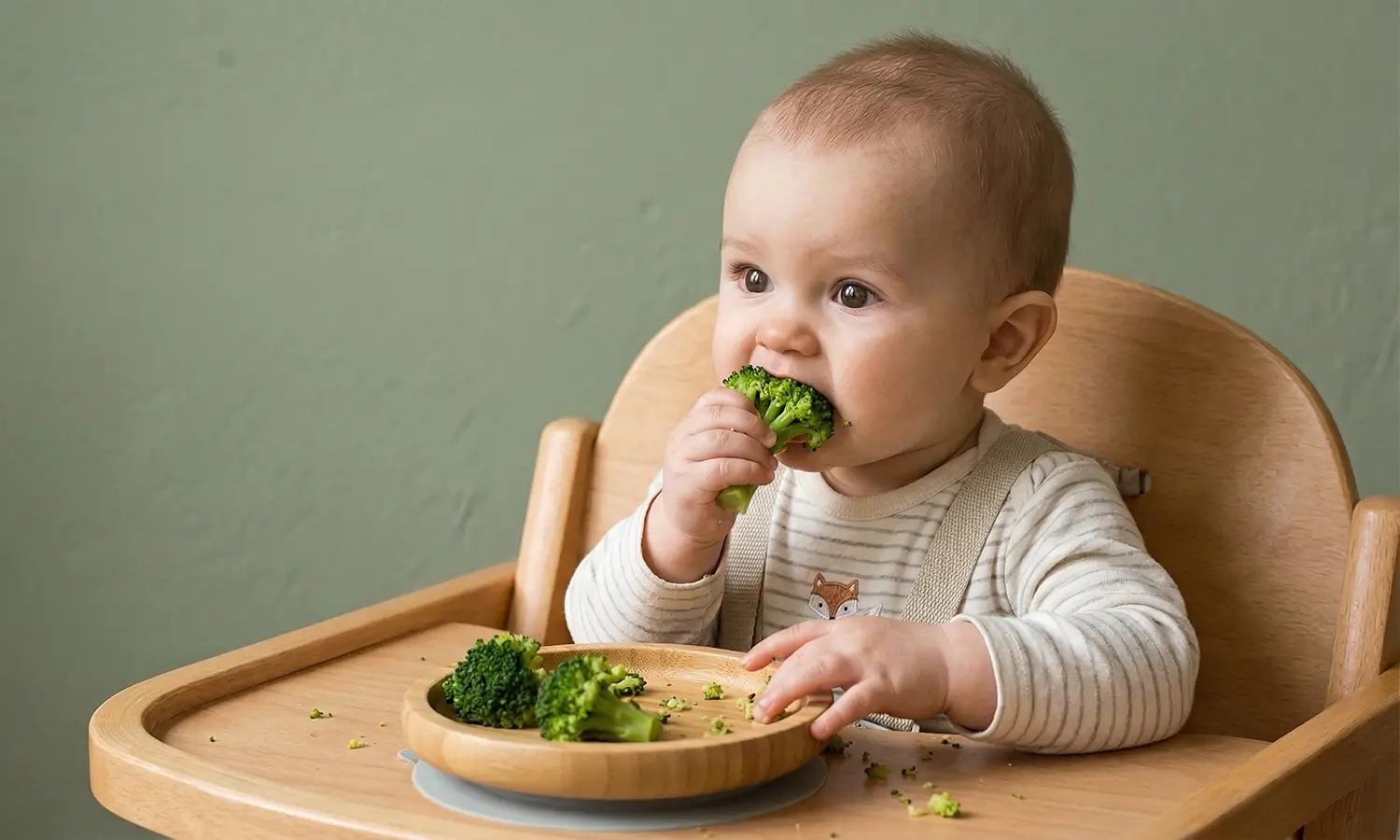
You've set up the high chair. You've got the bib. You might even have your phone out ready to capture the moment.
Then it hits you: what do I actually give them?
Not in theory. Right now. Today. Standing in front of the fridge with a six-month-old looking at you expectantly. This is the bit that trips most parents up, and it really doesn't need to. Let's just go through it.
There is no "right" first food
Before getting into specifics, it's worth saying this clearly: there is no perfect first food. And if you're still reading up on how baby-led weaning actually works, that's worth a look first. Your baby doesn't need a special starter food or a carefully curated introduction plan. They just need something soft, something easy to hold, and the chance to explore it.
Simple is genuinely better than complicated at this stage.
The easiest foods to start with
If you want a no-stress starting point, these five are hard to beat:
- Ripe banana - soft, easy to grip, no prep needed. Leave a little of the skin on the bottom half so your baby has something to hold onto
- Avocado - creamy, easy to squish, cut into thick fingers
- Steamed carrot sticks - soft enough to gum, easy to hold
- Broccoli florets - the stem works as a natural handle
- Sweet potato - roast or steam until soft, then cut into strips
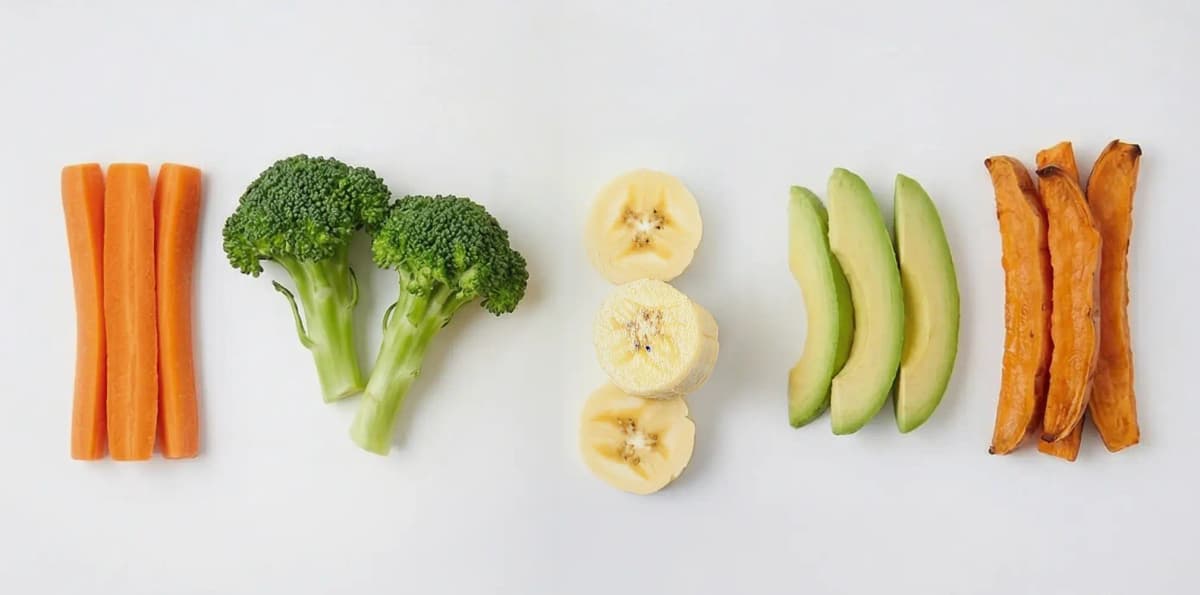
None of these need a recipe. No blending and no guides, and chances are you have these already at home. Just make sure everything is soft enough to squash between your fingers. If it resists, it's not ready.
A first meal might be two or three pieces of one thing on the high chair tray. They might pick it up, squish it, drop it, maybe get a tiny bit in their mouth. All of that counts. All of it is important learning.
Don't forget iron-rich foods
Here's something that doesn't always make the simple food lists: at around six months, your baby's iron stores from birth start to run low. Milk doesn't provide much iron, so it's worth weaving iron-rich foods in fairly early, not in a stressful way, just regularly.
Good options at this stage include scrambled eggs, soft flaked chicken, well-cooked lentils or beans, and fortified baby porridge. A few times a week from early on is plenty.
A simple way to think about it: mix your "easy" foods (banana, avocado, veg) with some "iron" foods (egg, chicken, lentils) as you go. That's a balanced start without needing a chart.
What else can they have?
More than most parents expect.
Once you've had a few sessions and you're both feeling comfortable, things can open up naturally. Toast fingers with a thin spread of butter, soft ripe pear, melon, full-fat plain yogurt, flaked fish with no bones. There's no strict order to follow, and no need to wait a set number of days before introducing something new (allergens aside - those need a little more care).
The main thing to pay attention to is texture, not a specific list they have to work through in sequence.
What about allergens?
This is the one area where a little more care is worthwhile. The main allergens, things like eggs, peanuts, wheat, fish, and dairy, should be introduced one at a time, a few days apart, so you can spot any reaction. In practice it's less fiddly than it sounds.
We cover exactly how to do this in our guide to introducing allergens during baby-led weaning, which is worth reading before you get to that stage.
A few things to avoid for now
Most foods can be adapted for a six-month-old, but a handful are best left out entirely:
- Whole nuts (choking risk; nut butters thinly spread are fine)
- Whole grapes, cherry tomatoes, or blueberries (cut into quarters)
- Honey (not safe under one year old)
- Anything very salty (their kidneys aren't ready for it yet)
That's really the main list, everything else can usually be made safe with a bit of prep. If you're ever unsure what a gagging episode looks like versus something more serious, our guide to the difference is worth a quick read.
How to prepare food, without overthinking it
No recipes, no special equipment needed. Three things to remember:
- Food should be soft enough to squash easily between your thumb and finger
- Cut it into pieces roughly the length of your little finger, so your baby can grip it in their fist and munch from the top
- Serve it warm, not hot, tested on the inside of your wrist the same way you'd check milk
That's genuinely all you need to know.
Do you need a food plan?
Honestly, it depends on you.
If you're the kind of person who likes to just get on with things, you really don't need one. Start with one or two soft, simple foods and build from there as you both get more confident. A note of what you've tried can be handy, mostly so you remember what landed well, but there's no schedule to follow and no particular order you have to stick to.
If you're more of an organiser, that's fine too. Some parents find it reassuring to have a plan of what they're going to offer across the week, especially for keeping track of allergens or making sure iron-rich foods are getting a regular look-in. A paper diary or journal, a notes app, or even a printed weekly template can help you feel on top of things.
If you're not sure how to run those first few sessions, our guide to starting baby-led weaning walks through exactly what day one looks like. And if you'd like something to fill in as you go, our free weaning chart is there to download.
Keep it simple
The parents who find weaning easiest are usually the ones who stop trying to do it perfectly.
A few soft vegetables, some banana, maybe an egg. Let your baby poke it, throw some of it on the floor, and get thoroughly messy. That's a successful meal at six months. It doesn't need to look like anything you've seen on Instagram.
You've got this.