


Is My Baby Ready? When Exactly Should We Start Weaning?
Everyone seems to have an opinion on this one.
Your mum says you should've started by now. Your friend's baby was eating porridge at five months. Your health visitor said six months. Someone in a parents Facebook group said to watch for the signs. Even your neighbour has asked "is the baby eating now?". And meanwhile you're sitting there fretting that you've missed it.
Rest assured, you haven't missed anything. Let's take a look together.
The six-month guideline: what it actually means
If you're still getting your head around what baby-led weaning actually involves, that's a good place to start before diving into the timing question.
You'll hear "start at six months" a lot, and that advice comes from the NHS and the World Health Organisation. It is solid guidance, six months is when most babies are likely to be developmentally ready. It's not however a deadline, a test, or a date you have to hit exactly. There's plenty of wriggle room!
Some babies are ready a little before six months, and some aren't quite there until a few weeks after. Both are of course completely normal. The age matters less than what your baby is actually showing you.
So what does "ready" actually look like?
Readiness for weaning is about development, not age. There are three key things that need to come together, and when they do, that's your signal.
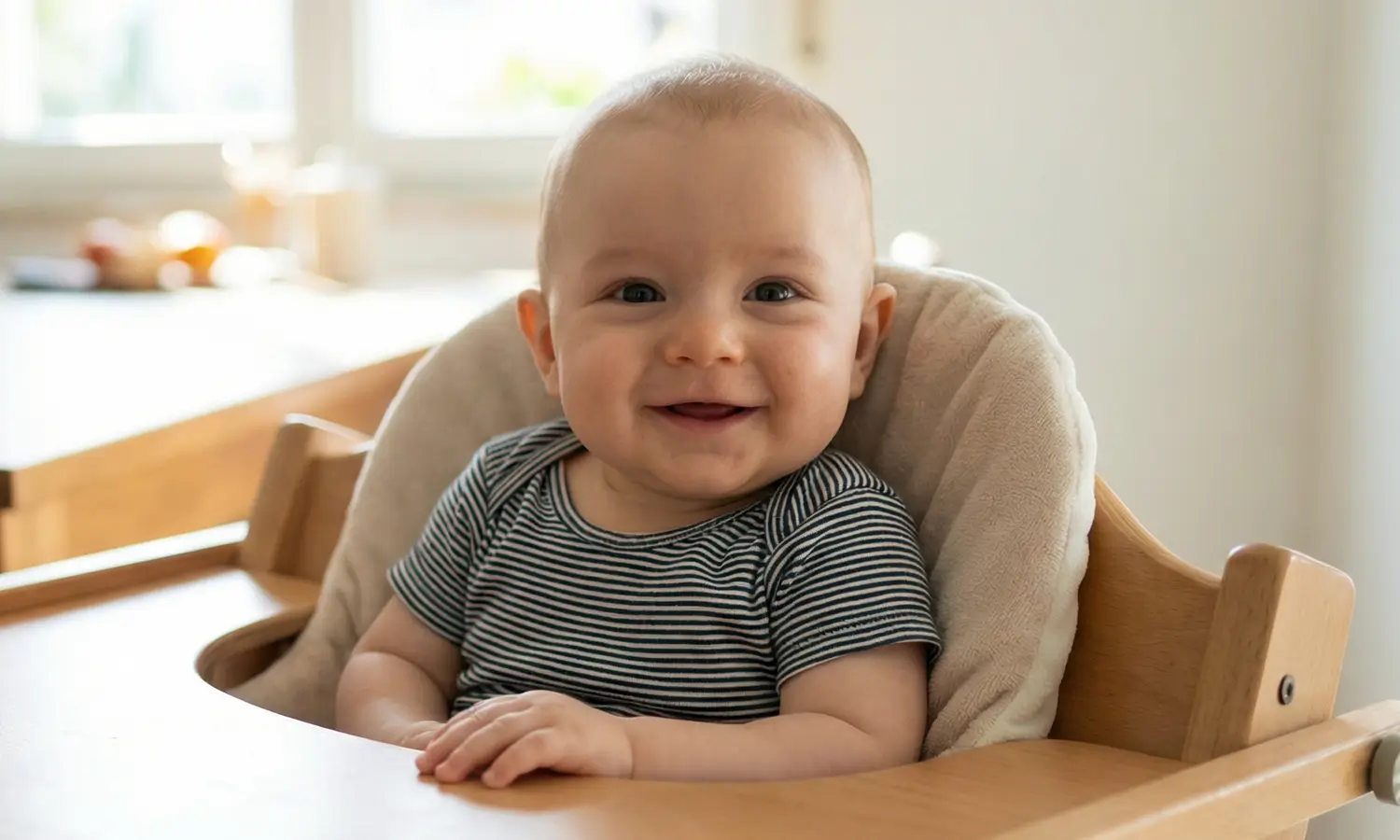
The first is being able to sit upright with minimal support. Not perfectly straight, but not slumping forward or flopping to the side either. Your baby should be able to hold their head steady and stay roughly upright in a high chair.
The second is being able to pick things up and bring them to their mouth. Toys, their own hands, anything they can grab. This hand-to-mouth coordination is what makes baby-led weaning work, because they need to be able to get food to themselves even if it looks like not much is going in!
The third is losing the tongue-thrust reflex. Babies are born with a reflex that automatically pushes things out of their mouth. It's protective, but it also means very young babies will spit everything straight back out. Once that's faded, they can actually start to manage food.
When all three are in place, here's your starting point! If only one or two are there, wait a little longer and don't be afraid to carry on as you are.
Things that mean your baby is NOT quite ready
This is where a lot of parents get caught out, because some of these look very convincing.
Waking up more at night doesn't mean your baby needs food. Night waking has lots of causes, and solids rarely fix it. Starting weaning early to help a baby sleep through sounds logical but doesn't really hold up.
Wanting more milk isn't a sign either. Growth spurts, developmental leaps, and plain old habit can all cause a baby to feed more frequently. That's not hunger for food, it's hunger for milk, and milk is perfectly satisfying.
Whether your baby has teeth is irrelevant. Babies can manage soft food without any toothy pegs, and having a tooth at five months doesn't mean they're developmentally ready for solids.
Being a 'big baby' doesn't mean they're ready earlier. Size and developmental readiness are completely different.
And grabbing at your plate, which almost every baby does from about four months, is curiosity, not readiness. Babies grab at everything, it's interesting and cute, but it's not the readiness signal it looks like.
What if my baby seems ready before six months?
This comes up a lot, and it's worth being careful here. Some babies do show genuine signs of readiness a little before the six-month mark, but sometimes what looks like readiness is just a baby being alert and curious.
If your baby is around five to five-and-a-half months and ticking all three readiness boxes clearly, it's worth a conversation with your health visitor before you start. Current guidance suggests not starting before 17 weeks (four months), but most professionals would want to discuss it with you individually rather than give a blanket answer.
What if they're six months old and showing no interest at all?
This is more common than people admit, and it causes a lot of unnecessary worry.
Some babies reach six months and are completely unbothered by food. They ignore it, push it away, or just look at you blankly when you put it in front of them. This is very normal. Milk is still doing everything it needs to do at this age, and there's no harm in waiting another week or two until there's a bit more interest there.
Occasionally interest comes several weeks after six months. If you're getting to seven or eight months and your baby is still showing very little interest in food, it's worth mentioning to your health visitor to rule anything out. But in most cases, it simply means your baby needs a bit longer, and that's just fine.
How do you actually decide?
If most of the readiness signs are there, you can start. If they're not, wait a little longer and check again in a week or two. If in doubt, just a few more days of watching usually makes it clearer.
There's no benefit to rushing, and waiting until your baby is clearly ready makes the whole BLW experience easier. A baby who isn't quite there yet will struggle with food in a way that's stressful for everyone. When the time does feel right, starting with a handful of simple, soft foods makes those first sessions much less daunting.
Once you've decided the time is right, our guide to starting baby-led weaning walks you through exactly what to do on day one: what to give, how to prepare, and what to expect.
The pressure from other people
This part is hard, and it doesn't really get talked about.
Grandparents often started weaning much earlier. Four months was common advice for years, so they can come with strong opinions about you being "late." Friends whose babies started early can make you feel like you're behind. Online groups can make it feel like every other baby is miles ahead of yours.
None of that is a useful comparison, or helpful when you're just trying to do your best. Every baby's development follows its own timeline, and what another baby was doing at five months tells you nothing about what your baby needs. The only baby worth watching is yours!
Don't forget you're not late and you're not behind. You're just waiting for your baby, which is exactly the right thing to do.